A multicultural Islamic wedding carries a particular kind of joy. One family may be planning the Nikkah with quiet reverence, while another is already discussing the Mehndi playlist, the Walima menu, and whether the elders will expect a separate receiving line. The celebration can feel expansive before a single vendor quote arrives.
The budget has to hold more than numbers. It has to hold Islamic financial ethics, cultural expectations, hospitality, modesty, and the emotional weight of two families wanting to feel seen. Many couples now spend on the order of 12 to 18 months planning and, in firsthand evaluation, coordinate 3 to 5 distinct cultural and religious ceremonies, so vague estimates rarely survive the first serious planning meeting.

What's Inside
- Navigating the Costs of a Blended Islamic Celebration
- Defining the Scope of Your Multicultural Events
- Establishing Your Baseline and Managing Family Contributions
- The Multicultural Budget Breakdown: Where Your Money Goes
- Hidden Costs in Fusion Weddings to Watch Out For
- Scope and Limitations of Wedding Cost Averages
- Final Takeaways for a Financially Sound Celebration
Navigating the Costs of a Blended Islamic Celebration
The first budget conversation should name the tension plainly: families want beauty, and Islam asks for restraint. That does not mean the wedding must feel bare. It means the spending should serve meaning before spectacle.
In a blended Islamic celebration, the couple may be funding a Nikkah, one or more cultural pre-wedding events, a reception-style dinner, and the Walima. Each event carries its own guest list, clothing expectations, catering needs, photography hours, and family politics. A South Asian-Arab wedding will not spend in the same pattern as a Somali-Western wedding, even if the guest count looks similar on paper.
Key Takeaway: A well-structured budget is not there to shrink the celebration. It protects the couple from making hurried, expensive decisions just to keep every tradition alive at once.
The strongest budgets Leila has seen in planning files are not the most rigid. They are the ones that show what matters, who is paying, when payments are due, and what will be reduced if costs rise.
Defining the Scope of Your Multicultural Events
Before assigning money, define the wedding. Not the Pinterest version. The actual sequence of gatherings your families expect to attend.
Separate the religious essentials from cultural additions
A practical event map usually starts with three categories:
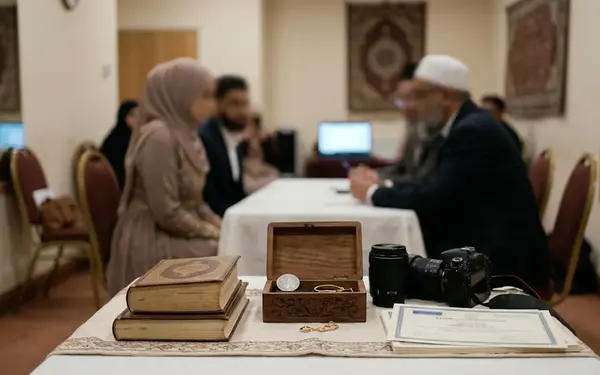
- The Nikkah ceremony: the religious marriage contract, often intimate but sometimes hosted with a formal meal.
- Cultural pre-wedding events: such as Mehndi, Henna night, Sangeet-style gatherings, traditional family dinners, or women-only celebrations.
- The Walima: the public marriage feast traditionally hosted by the groom or groom’s family, depending on family custom and means.
Guest lists, per community guides, can range from 150 to over 400 attendees per event, and celebrations may extend across 3 to 4 consecutive days. That changes everything. A “small extra night” becomes a second venue, second outfit, second menu, second décor plan, and another round of transportation.
Blend cultures without multiplying events by default
When two cultures meet, families sometimes assume every custom needs its own evening. An Arab and South Asian wedding may quickly become a Nikkah, dholki, Mehndi, formal reception, and Walima. A Western and African pairing might add a church-family-style dinner, traditional entrance ceremony, and separate elder blessing.
Not every tradition needs its own invoice.
Some couples combine cultural moments inside one event: a modest Henna station during a women’s gathering, a traditional entrance during the Walima, or family recitations before dinner. This keeps the emotional value while reducing venue and catering duplication.
Pro Tip: Ask each side of the family to name the two traditions they would feel genuinely sad to lose. Start there, not with a list copied from another wedding.
Keep Israf in the room
Islam warns against Israf, or extravagance, but it also honors generosity and feeding guests. The Walima should feel dignified and welcoming. It does not have to compete with the most elaborate cultural night of the week.
One common budget mistake is exhausting funds on pre-wedding cultural nights, then leaving too little for a respectful Walima. That imbalance creates stress late in planning, when deposits are already locked and parents feel cornered.
Establishing Your Baseline and Managing Family Contributions
The “money talk” is rarely one conversation. It is a sequence, and it goes better when no one is surprised in public.
A step-by-step way to begin
- Meet as a couple first. Decide what you can personally contribute without debt or resentment.
- List the likely events. Keep this as a working draft, not a demand.
- Speak to each family separately. Ask what they are comfortable contributing and whether that support is tied to a specific event.
- Clarify traditions. Some families expect the groom’s side to host the Walima, while others split venue, catering, or décor differently.
- Bring the numbers together. Create one master budget before booking any major vendor.
Initial budget discussions should happen not far from 9 to 11 months before the first event when possible. That timing gives families room to adjust expectations before high-demand vendors are unavailable.
A strict three-way split between the couple and both sets of parents sounds tidy, but it often clashes with Islamic financial responsibilities and cultural customs. The fairer method is to document who is hosting which event, who is gifting support, and which costs the couple will control directly.
Build one master spreadsheet
The spreadsheet should track estimated cost, actual quote, deposit paid, balance due, payment owner, due date, and notes. During active planning, update it bi-weekly. This rhythm catches cost creep early, especially when aunties start adding dessert tables or extra floral pieces “just to make it complete.”
For couples who need a neutral starting point, the principles of managing large financial goals are useful outside the wedding context too.
Warning: Do not accept a family contribution without asking whether it comes with guest-list control, vendor preference, or event-specific expectations. Silence here becomes expensive later.
The Multicultural Budget Breakdown: Where Your Money Goes
In multicultural Islamic weddings, the biggest budget drivers are usually not the decorative extras. They are food, clothing, and venue flexibility.
Catering: Halal requirements and multi-cuisine menus
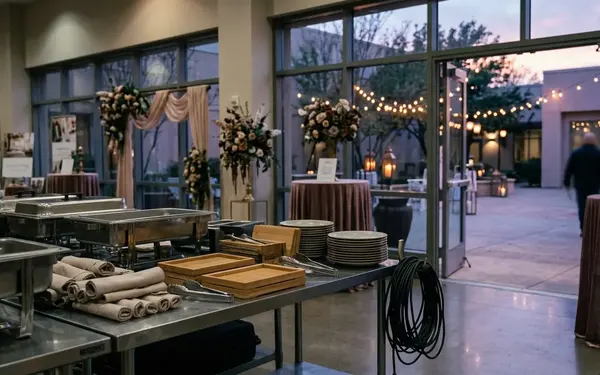
Catering costs fluctuate significantly depending on whether the venue requires bringing in an external Halal-certified kitchen setup versus having an in-house Halal menu. That one policy can shift staffing, delivery, equipment rental, and service fees.
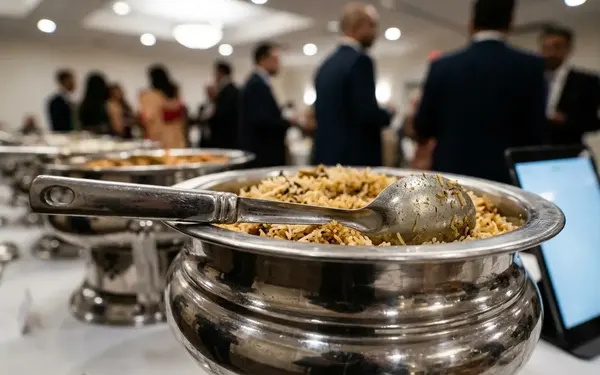
Halal catering minimums, per regional comparison, often require a guest count of 200 to 250 individuals, which matters when one event has 180 guests and another has 400. Multi-cuisine menus add another layer. A Moroccan tagine station, biryani service, and Western plated dessert may delight both families, but the kitchen has to execute them without confusing service flow.
In tasting appointments, mixed menus tend to work best when each cuisine is represented with intention rather than token dishes. Two excellent mains beat six lukewarm compromises.
Attire: multiple modest looks
The bride may need a white gown for the reception, a lehenga for Mehndi, a takchita for a Moroccan night, an abaya-inspired Nikkah look, or a second modest outfit for the Walima. Groom’s attire can also multiply across cultural jackets, sherwanis, thawbs, suits, or traditional wraps.
Custom modest alterations, in firsthand evaluation, often require 3 to 5 fitting sessions. Sleeves, neckline coverage, lining, opacity, and movement all matter. A gown that looks modest while standing may not stay modest while sitting for the Nikkah contract signing or greeting elders on a stage.
Venue and décor: flexibility has value
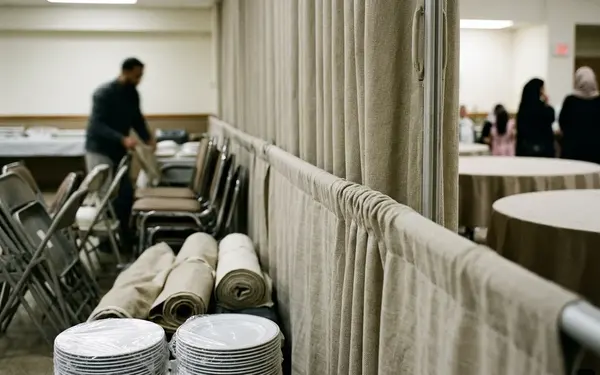
The right venue is not always the grandest ballroom. It is the one that allows outside Halal caterers, has prayer-friendly space, can support gender-sensitive seating if needed, and can handle culturally specific décor.
Stages, mandaps, floral arches, majlis seating, sweetheart platforms, and family receiving areas change the floor plan. Ask about rigging rules, open flame restrictions, vendor load-in times, and whether décor must be removed the same night.
Key Takeaway: A venue that looks cheaper upfront may cost more if it blocks your Halal caterer or charges heavily for external vendor access.
Hidden Costs in Fusion Weddings to Watch Out For
Hidden costs in fusion weddings are often translation costs, travel costs, and modesty costs. They are not glamorous, so they rarely make the first budget draft.
Language and ceremony support
A bilingual Nikkah can be deeply moving when handled well. It can also require a bilingual officiant, printed translations, interpretation for elders, and extra ceremony time. Bilingual officiant booking lead times, per community guides, can run 6 to 8 months, especially in cities with limited availability.
Translation is not just about words. It helps both families understand the khutbah, the consent process, the mahr discussion, and the emotional meaning of the ceremony.
Specialized cultural vendors
Henna artists, drummers, zaffa performers, nasheed groups, cultural dressers, turban tiers, modest bridal stylists, and traditional dessert makers may all charge separately from standard wedding vendors. Some are only available during certain weekends or community-heavy seasons.
In our review of multicultural planning files, the missed cost was often not the vendor fee itself. It was the supporting cost: parking, vendor meals, extended photography coverage, security, sound permits, or an extra dressing room.
International family travel
Flights, hotel blocks, airport pickups, elder accommodations, and pre-wedding meals for overseas relatives can quietly become a separate hosting budget. Couples should decide early which costs they will cover and which relatives will manage independently.
Set aside a contingency fund in the 10 to 15 percent range of the total budget for last-minute cultural or religious requirements. This is not a luxury cushion. It is what prevents a panicked credit-card decision when a family elder requests a separate women’s entrance, a prayer-area adjustment, or an added translator two weeks before the event.
Scope and Limitations of Wedding Cost Averages
Average wedding costs can mislead multicultural Muslim couples because averages flatten the exact details that drive the budget.
Location matters. A city with several Halal-certified caterers creates different pricing pressure than a rural area where the caterer must travel. Vendor travel surcharges may apply for distances in the 50 to 75 mile range, and that can affect catering, décor, photography, hair, makeup, and cultural entertainment.
Couples often see rate fluctuations in the peak months of May through September. A Saturday Walima in that window will behave differently from a weekday Nikkah in a quieter season.
Older family budgets are useful for memory, not forecasting. Relying on historical numbers from an older sibling’s wedding will likely create a shortfall because recent inflation has changed vendor pricing across the modest bridal industry. This guide is a structural framework, not a fixed price sheet; the conclusion depends on your city, guest count, cultural pairing, and vendor access.
Pro Tip: When comparing quotes, compare what is included. A caterer with a higher per-person rate may include staff, serving ware, and setup, while a lower quote may push those costs into separate rentals.
Final Takeaways for a Financially Sound Celebration
A financially sound multicultural Islamic wedding starts early, speaks honestly, and refuses to let aesthetic pressure outrank meaningful tradition.
The couple should know which events are essential, which customs can be combined, and which expenses belong to each family. They should also know when the final vendor payments are due. Many final payments fall in the 14 to 21 day window before the Nikkah, right when emotions and logistics are already intense.
After the celebration, complete a financial reconciliation within the first 30 to 45 days. Return deposits, close shared accounts, repay family advances if agreed, and document anything still outstanding. It may not feel romantic, but it protects the marriage from carrying wedding confusion into the first months of married life.
The most practical next step is simple: open a dedicated wedding budget tracker today. The Perfect Muslim Wedding Planning Kit can help couples organize event tabs, family contributions, vendor payments, modest attire costs, Halal catering notes, and contingency planning in one place.
Key Takeaway: Spend first on the obligations, hospitality, and traditions that carry real meaning. Let the rest earn its place in the budget.