The Beauty of Two Worlds Colliding
A bride adjusts an intricate South Asian dupatta over her modest Western-style white gown. The final pins settle into place moments before the Nikah. Across the courtyard, the groom’s family gathers in embroidered Nigerian agbadas while greetings in two languages pass between trays of tea.
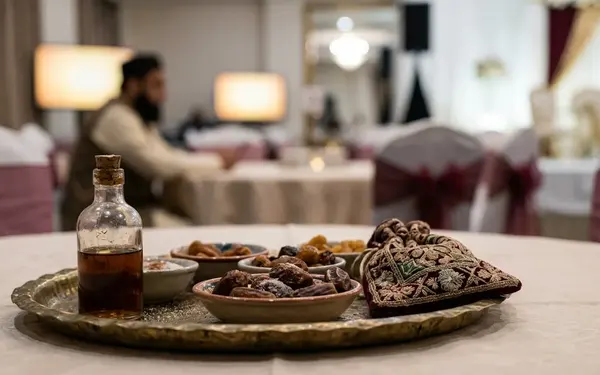
The atmosphere forms before anyone takes a formal seat. Fabric moves in the evening air, cups touch saucers, and relatives test unfamiliar names with care. In firsthand evaluation of a 2,500-square-foot open-air courtyard, planners mapped the acoustics so unamplified family greetings could remain audible alongside background instrumental tracks where appropriate. They reserved 15 to 25 minutes for mingling and welcome tea before formal seating.
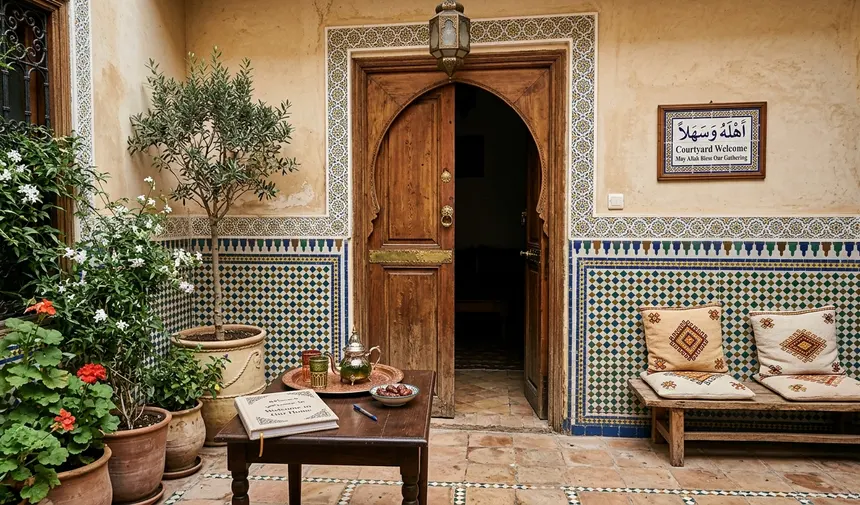
That opening interval carries more weight than its place on the schedule suggests. It allows both families to arrive as participants rather than spectators. Interleaving Quran recitation with dual-language greetings can also establish the weekend’s order: Islamic practice provides the central structure, while each heritage shapes how guests experience it.
Share The Welcome
Choose one visible welcome element from each family, such as tea service, textiles, spoken greetings, or entrance music acceptable to the couple’s religious framework. Place both elements in the same opening sequence so neither culture feels appended later.
The planning challenge is one of representation and sequence. A polished multicultural Muslim wedding gives the Nikah clear precedence, preserves meaningful family customs, and avoids turning either heritage into decoration.
Identifying Religious and Cultural Non-Negotiables
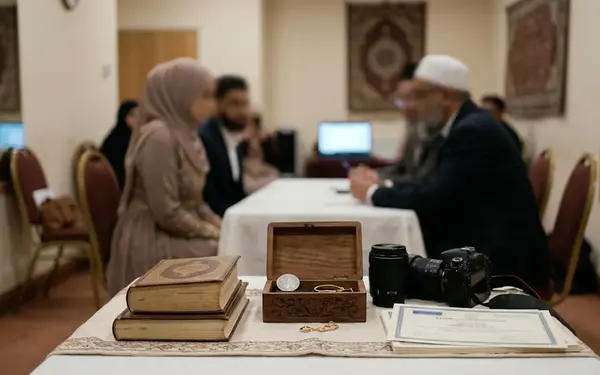
Begin by separating the weekend into two categories. The first contains the Islamic requirements around the Nikah: consent, witnesses, and mahr. The second contains cultural ceremonies and preferences, including a Mehndi, Sangeet, Tea Ceremony, family entrance, particular attire, or a customary meal.
This categorization prevents logistical gridlock. Experienced multicultural wedding planners use it to identify which decisions affect the religious foundation and which remain open to timing, design, or format changes.
Run The Family Alignment Meeting
Schedule the first alignment meeting 9 to 12 months before the target wedding date. Ask the couple and both sets of parents to prepare their three leading must-haves in advance. During the meeting, record each request without debating it immediately.
- Label the request: Islamic requirement, cultural ceremony, hospitality preference, or aesthetic choice.
- Name its owner: Identify the person responsible for explaining the custom and approving its final form.
- Define its operating needs: Note the space, attire, food, participants, and approximate place in the weekend.
- Check for collisions: Compare the request with Salah, the Nikah, garment changes, meal service, and venue movement.
- Record the decision: Add the agreed version to the Perfect Muslim Wedding Planning Kit rather than leaving it in a family message thread.
A Mehndi may be emotionally essential to one family even though it sits outside the Nikah requirements. Giving it a clear category does not diminish it. The label simply shows where compromise can occur if the venue, schedule, or guest flow creates pressure.
Multicultural Muslim Wedding Planning Checklist
- Isolate consent, witnesses, and mahr from cultural preferences.
- Schedule family alignment meetings 9 to 12 months in advance.
- Record the three leading must-haves from the couple and each set of parents.
- Assign an owner to every cultural ceremony.
- Block local Salah times on the master weekend calendar.
Structuring a Cohesive Weekend Timeline
Attempting to compress a traditional South Asian Mehndi, a Nigerian engagement ceremony, and an Islamic Nikah into a single 12-hour window often produces severe delays and skipped prayer times. The schedule may look efficient on paper, yet it ignores garments, photography, room resets, family movement, and the natural pace of ceremonial greetings.
The Split-Day Strategy
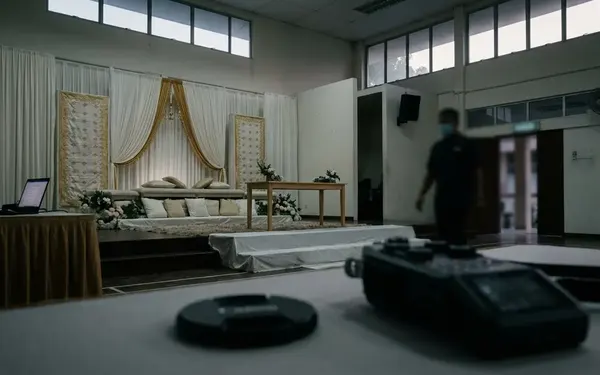
A 48-hour split-day schedule might place the cultural night on Friday, the Nikah on Saturday morning, and the fusion reception on Saturday evening. Each event receives a distinct mood, and guests gain time to change attire or rest. This format suits weddings with intricate cultural garments, separate venues, or several hosted meals.
Its trade-off is operational: transport, hospitality coverage, and family coordination continue across two days. The couple also needs a reliable handoff process so clothing, jewelry, gifts, and ceremony materials arrive at the correct location.
The Sequential Strategy
In a sequential schedule, the Nikah, meal, cultural program, and reception flow through one day. It can reduce repeated guest arrivals and venue transfers. It also leaves less room for recovery when a ceremony runs long.
Build dedicated transition blocks into either model. Heavy dupatta pinning and intricate hijab restyling require focused time, particularly when jewelry or headpieces must be removed and reset. Treat each outfit change as a scheduled production step with a room, named helpers, garments laid out in order, and photography expectations already agreed.
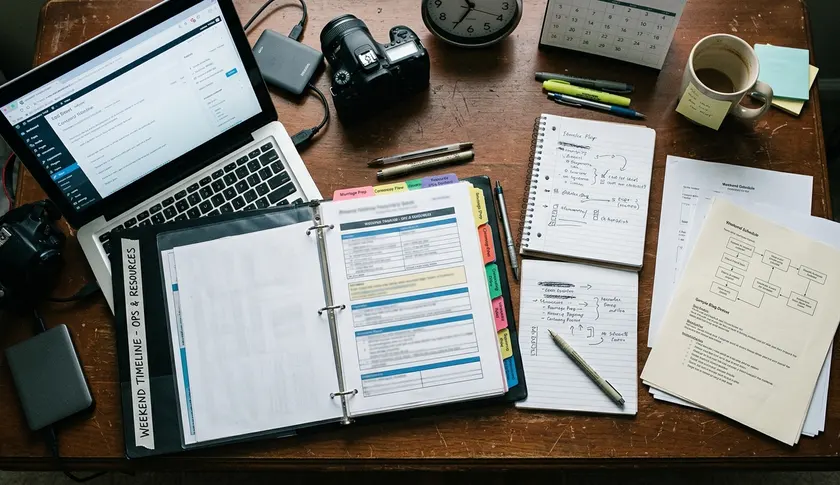
Protect The Transitions
Do not place speeches, formal portraits, or a venue departure immediately after a complex outfit change. Give the transition its own block, then add the next public commitment to the calendar.
Designing Bilingual and Bicultural Invitations
The invitation suite is the first operating guide for the wedding weekend. It should tell guests what they are attending, when they need to arrive, and how to participate respectfully.
Arabic calligraphy can sit within a primary English or Spanish layout without crowding the page. Establish a visual hierarchy first: couple’s names, ceremony, date, location, and response details. Use the second language in balanced panels, facing sections, or a separate enclosure rather than shrinking every line to fit.
Plan For Proofing
Allow 4 to 6 weeks for print production and proofing when the suite uses bilingual typesetting. Review names, honorifics, dates, transliteration, and reading direction separately. A fluent reader should check each language in context; visual symmetry alone cannot verify wording.
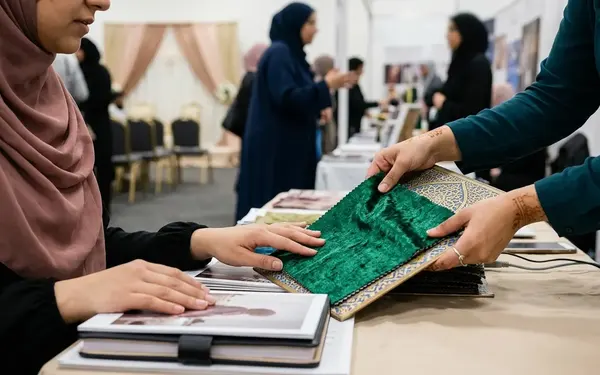
For a tactile suite, cardstock on the order of 120 pounds can carry foil-pressed geometric Islamic patterns beneath cultural floral motifs. The two design languages should share scale and spacing so one does not appear to be a secondary embellishment.
Move detailed guidance to an insert card or wedding website. Explain phrases such as modest attire requested, identify whether head coverings will be available, and briefly describe ceremonies unfamiliar to part of the guest list. If events have different dress expectations, list them individually rather than issuing one vague weekend dress code.
Proof Every Script
Approve bilingual wording before foil, embossing, or specialty printing begins. Corrections after those production stages affect both timing and material use.
Curating a Fusion Menu: Halal and Beyond
Food gives both families an immediate way to recognize themselves in the celebration. The working baseline is a strictly zabiha halal menu, followed by a deliberate choice about how the two culinary traditions will meet.
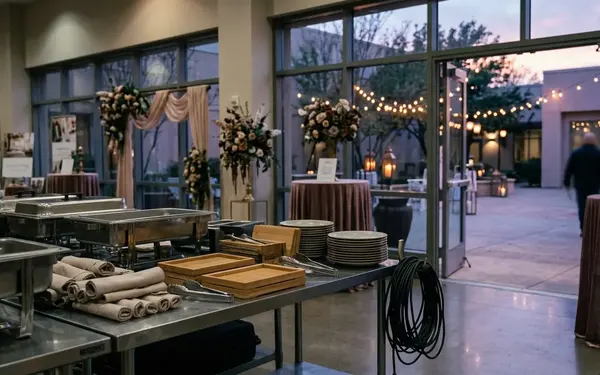
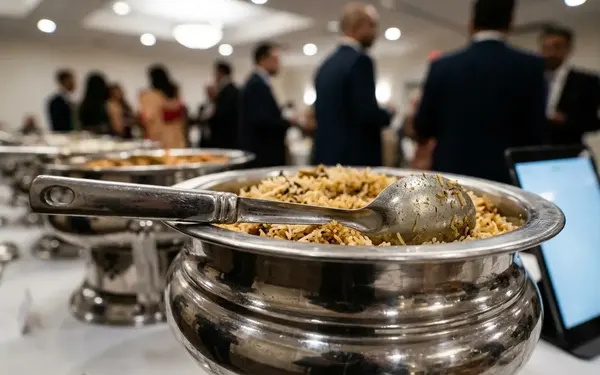
One reception might open with halal Middle Eastern appetizers and continue with a traditional Western plated dinner. Another may use dual food stations, allowing guests to move between dishes associated with each family. The station model provides visible balance; plated service creates a more controlled sequence and lets the chef compose fusion within each course.
Adapt Family Recipes Carefully
Hold menu tasting and recipe adaptation sessions 3 to 4 months before the reception. Bring the original family recipe, including the preparation method, rather than supplying the caterer with a dish name alone. Culinary teams can then identify proteins or other components that require substitution while preserving the spice profile, texture, and serving style.
Regional distributors can supply zabiha halal certified poultry and beef to replace non-compliant proteins in traditional family dishes. Ask the caterer to document the selected ingredients in the production notes so the tasting version and reception version follow the same specification.
The strongest fusion menus retain familiar anchors. A beloved sauce, rice preparation, pastry, or tea service may carry more family meaning than an elaborate hybrid dish. Give those anchors prominent positions, then use appetizers or late service for more playful combinations.
Review The Service Flow
- Confirm which dishes appear at each station or course.
- Keep family-recipe adaptations linked to their approved ingredient notes.
- Coordinate meal service with Salah and the formal program.
- Explain unfamiliar dishes through concise menu cards.
- Place each family’s food traditions at comparable points in the meal.
Navigating Family Expectations and Compromise
Family friction often appears in practical language: a request for a different room layout, concern about dancing, uncertainty over modest attire, or pressure to include a ceremony in a particular form. Beneath the request may sit a deeper fear that one family’s beliefs or heritage will disappear.
The couple needs a shared communication position before speaking with relatives. Draft the explanation together, agree on the boundary, and decide which details remain flexible. Separate conversations with inconsistent wording invite repeated negotiation.
Explain The Purpose
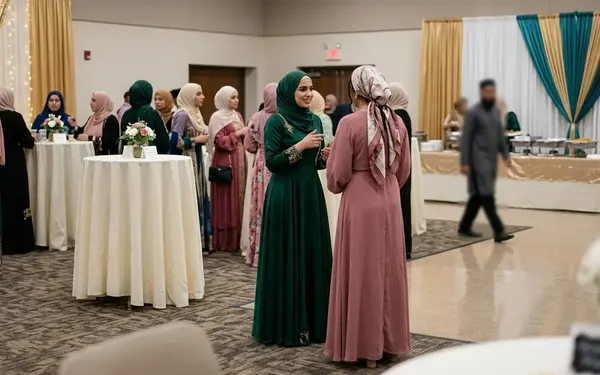
When discussing gender-separated dancing with non-Muslim in-laws, describe how guests will experience the arrangement. Show the rooms or partitioned areas, explain where family members will sit, and identify how entrances, dining, and photography will work. The necessity of gender-separated spaces varies with the families’ cultural backgrounds and level of observance, which determines whether the venue needs dual ballrooms or a partitioned seating arrangement.
Modesty requirements benefit from the same practical treatment. Replace abstract instructions with clear guest-facing details: the expected coverage, the events where the guideline applies, and any accommodations provided at the venue.
Use Structured Dialogue
- State the religious or cultural purpose of the request.
- Describe the guest experience in concrete terms.
- Identify the elements open to adjustment.
- Record the final decision and the person communicating it.
Proactive communication and compromise resolve many scheduling and aesthetic conflicts. Deeply rooted theological differences about ceremony practices can exceed the reach of ordinary planning conversations. In those cases, structured pre-marital counseling prompts may clarify the disagreement, while mediation by a trusted community leader can address contested religious tenets. If mediation is needed to finalize logistics, schedule it 6 to 8 weeks before the event rather than during the final production days.
Speak As One
Send important boundary decisions from the couple together. Use the same wording with both families and keep the written decision in the planning file.
Draft Your Master Event Flow Around Salah
The master event flow begins with a blank weekend calendar. Before placing the welcome tea, Mehndi, Nikah, portraits, dinner, or reception entrances, mark the five daily Salah times for the wedding dates and venue location.
Use local astronomical data for the venue’s geographic coordinates to pinpoint the prayer windows. Then build buffer periods of 30 to 45 minutes around each one for guest movement, wudu, and congregational prayer. These blocks should appear in the couple’s schedule, the venue timeline, and the run sheets used by catering, photography, transport, and family coordinators.
Build In This Order
- Block Salah: Mark all five daily prayer windows and their buffers.
- Place the Nikah: Give the ceremony a protected arrival and seating period.
- Add cultural ceremonies: Fit the Mehndi, Tea Ceremony, Sangeet, or family traditions into the remaining windows.
- Position meals: Check catering service against prayer, garment changes, and room transitions.
- Test every handoff: Trace the couple, close family, guests, clothing, and ceremony materials from one block to the next.
I start the working file with prayer anchors because every later decision becomes easier to test. A proposed speech either fits the available window or it does not. A cultural ceremony can expand only until it reaches the next protected transition.
Open the master calendar in your Perfect Muslim Wedding Planning Kit now, enter the venue-specific Salah times for each wedding date, and block the 30-to-45-minute prayer buffers before adding a single ceremony.