The Theological Foundation of Hadiya
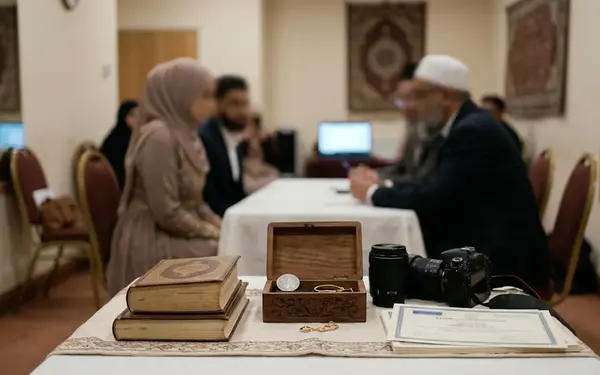
The quiet focus of the congregation settles as the Imam begins the ceremony, surrounded by the subtle scent of attar and floral arrangements. Understanding the theological distinction between contractual Mahr and voluntary Hadiya during a Nikah lasting approximately 15 to 30 minutes provides the foundation for all Islamic wedding gifting. The Mahr is recorded directly on the physical marriage certificate as a mandatory provision from the groom to the bride.
Hadiya operates entirely outside this contractual framework—it serves as a voluntary gesture of affection designed to impart barakah, or blessings, on the new household. Couples utilizing a Perfect Muslim Wedding Planning Kit often outline these distinctions early to manage family expectations and guide guests toward appropriate gifting practices.
Navigating Cash Traditions on the Wedding Stage
Cash remains a widely appreciated standard across diverse Islamic cultures. It provides immediate, practical support for the couple's new life together, allowing them to allocate funds toward their most pressing needs. South Asian traditions feature the practice of salami, where guests hand cash envelopes directly to the couple on stage.
Greeting lines on the wedding stage typically last between 90 and 120 minutes, requiring significant stamina from the newlyweds.
Bypassing Stage Line Delays Presentation matters when participating in these cultural exchanges. Standard envelope sizes, such as approximately 3.625 by 6.5 inches, fit securely into standard acrylic or wooden card boxes placed at the venue entrance. Guests who prefer bypassing the lengthy stage line can drop their envelopes securely upon arrival.
Managing Physical Gifts and Online Registries
Modern couples increasingly blend Western registry convenience with traditional household preparation. Guests should purchase directly from the registry and route items to the couple's home. Consider the logistical difficulty of securing physical boxes for 300 to 450 attendees at a traditional Walima hall. Transporting blenders, dinnerware sets, and large packages from a banquet hall at midnight creates unnecessary friction for the families involved.
Direct-to-home shipping should be scheduled to arrive within a 7 to 14-day window prior to the wedding date. This timing helps ensure packages are received and secured before the family becomes consumed by event preparations. Direct-to-home shipping becomes less practical during destination weddings, as couples often remain away from their primary residence for an extended 21 to 28-day period following the events.
Coordinating Gift Delivery Across Multi-Day Celebrations
Multi-day cultural celebrations often span a 3 to 5-day period. Navigating events like the Mehndi, Nikah, and Walima requires a clear understanding of when to present your contribution. The main wedding gift belongs at the Walima, the celebratory reception hosted by the groom's family.
Islamic principles emphasize modesty in giving. Guests present gifts discreetly, avoiding public displays of value that might cause discomfort among attendees with different financial capacities. For those unable to attend the physical events, digital transfers are typically initiated 24 to 48 hours before the Walima begins to ensure discreet delivery. This approach maintains the spirit of the tradition while adapting to modern geographical constraints.
The Historical Precedent of the Walima Feast
The modern reception traces its roots to specific communal practices established centuries ago. A wedding gift functions purely as a voluntary contribution to the couple's foundation. Guests participate in the celebration to offer prayers and community support for the new union.
Historical records indicate the Walima was traditionally held within 1 to 3 days following the consummation of the marriage. The feast explicitly mandated the inclusion of individuals from lower socioeconomic brackets who could not contribute financially.