Why a Divided Portfolio Earns Its Place at the Nikah Table
A physical, divided portfolio gives the wedding morning a dependable center. At the signing table, the officiating Imam can review the marriage paperwork while witnesses prepare their identification and parents check the ceremony sequence. Nobody needs to unlock a phone, search a message thread, or wait for a shared folder to load.
Digital tools still help with invitations, revisions, and conversations. Printed documents make the handover easier when several people need different information at once.
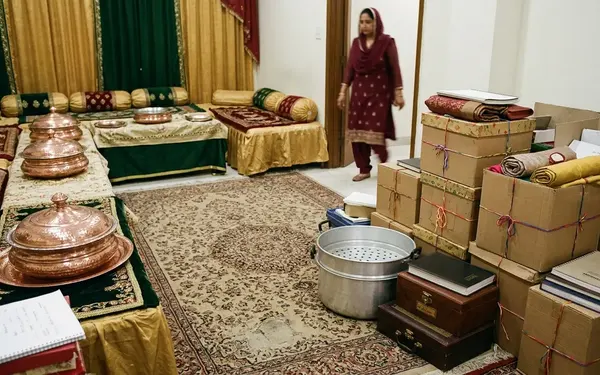
A celebration spanning Mehndi, Nikah, and Walima creates separate streams of responsibility. The relatives welcoming guests at the Mehndi may have little involvement with the mosque booking. The person approving Walima catering may never see the marriage documents. Moving between venues makes those gaps more noticeable.
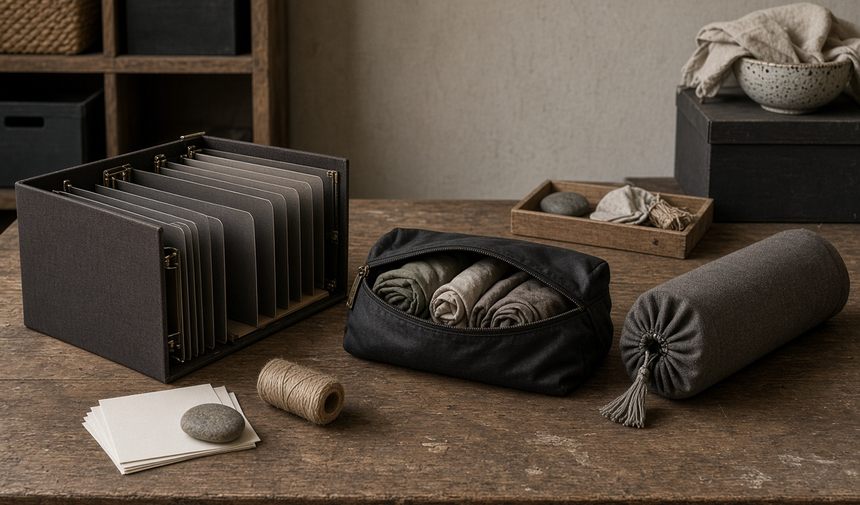
Build the Perfect Muslim Wedding Planning Kit around distinct vessels: a protected legal folio, a vendor master binder, and a bridal styling pouch. Give each a named custodian and record who receives it at the next venue. Keep sensitive identity documents out of the binder that circulates among suppliers.
Before the wedding, walk through the handovers: who brings the civil license, who carries the printed timeline, and who takes the signed documents home? Municipal requirements and mosque procedures vary, so the document checklist must reflect the actual ceremony location.
The Nikah Folio: Civil License, Nikahnama, and Mahr
Reserve a rigid folder or fire-resistant document sleeve for the papers that establish and record the marriage. Keep it closed, dry, and with its designated custodian until the officiant needs it.
Keep Civil and Religious Documents Distinct
The municipal civil marriage license serves the civil registration process. The Islamic Nikahnama records the religious marriage agreement. Treat them as separate checklist entries, even where an officiant handles both during the same appointment.
- Civil license: confirm issuance, validity dates, signing instructions, and the return procedure with the issuing authority.
- Nikahnama: obtain the mosque or officiant’s accepted form and confirm which copies each party retains.
- Identification: prepare requested copies for the bride, groom, Wali where applicable, and witnesses. Check whether originals must also be presented.
- Signing tools: clip working archival-ink pens inside the folder, using the ink color and pen type accepted for the documents.
Assign responsibility for returning the completed civil paperwork before the celebration begins. A signed license still needs to follow the issuing authority’s filing process.
Give the Mahr Its Own Sleeve
Keep the written Mahr terms beside the Nikahnama. Clearly identify the prompt portion, Mu’ajjal, and any deferred portion, Muwajjal, including the agreed amount or item and the agreed timing or conditions. Resolve wording with the couple and officiant before printing the final documents.
If gold coins or heirloom jewelry will be presented during the ceremony, place them in a cushioned pouch. Label its recipient discreetly and name the relative responsible for the handover.
Protect the Originals
Leave original documents unmarked unless the issuing authority instructs otherwise. Use a separate checklist for notes, and keep identity copies away from guest-facing schedules.
The Venue Binder: Halal Service, Prayer Access, and Privacy
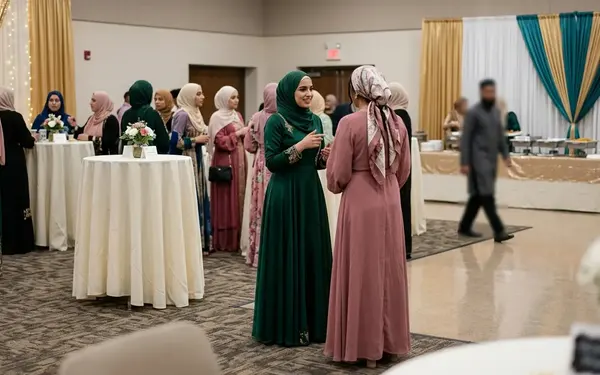
A banquet floor plan can look complete while leaving essential questions unanswered. Can guests reach the prayer room without crossing a photography setup? Will a movable partition block a service route? Does the photographer know when a women-only gathering becomes camera-free?
Use a six-tab vendor binder to put those answers beside the relevant instructions.
- Contacts and contracts: signed agreements, arrival arrangements, and the family representative authorized to approve changes.
- Halal catering: supplier certificates where applicable, their scope, the agreed menu, and written service requirements.
- Audio and recitation: microphone checks, cues for Quranic recitation, speeches, and the person approving each cue.
- Photography boundaries: no-photo zones, women-only camera restrictions, individual privacy requests, and permission for sharing images.
- Floor plan and seating: partition positions, clear circulation routes, and elders’ priority seating near the stage where requested.
- Prayer and facilities: quiet prayer-room access, Wudu washroom directions, and prayer breaks carried into the catering schedule.
Read halal documentation against the actual catering arrangement. A supplier certificate may address the meat source while leaving preparation and service questions for the caterer to answer separately.
Build Prayer Breaks Into Service
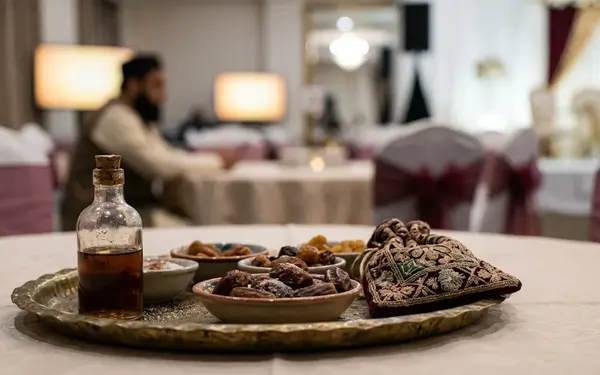
Maghrib and Isha timing changes with the season and location. Check the wedding-date prayer timetable, then allow room for guests to reach the facilities, make Wudu, pray, and return. A distant prayer room or narrow corridor needs more allowance than a room beside the ballroom.
Standard banquet templates provide a starting layout; the final schedule needs the family’s prayer arrangements and the venue’s physical constraints. Print the same revised timings for catering, audio, and the family coordinator.
The Bridal Pouch: Modest Styling and Ceremony Backups
Heavy embroidery pulls. Silk slips. A beaded cuff catches on an exposed pin. Pack the bridal pouch around the actual lehenga, kaftan, kebaya, or gown, and test its contents during the outfit fitting.
- Styling supplies: heavy-duty magnetic hijab fasteners, fabric-safe double-sided tape, and snag-free pearl-headed pins. Check their hold and placement on the chosen fabric.
- Garment care: a portable steamer, carried separately in a heat-safe bag and used according to the garment’s care instructions.
- Prayer essentials: spare clean prayer rugs for the bridal suite and clear access to suitable washing facilities.
- Refreshment supplies: unscented wipes for cleanup around embroidered cuffs. Ordinary cosmetic wipes do not replace the washing required for Wudu.
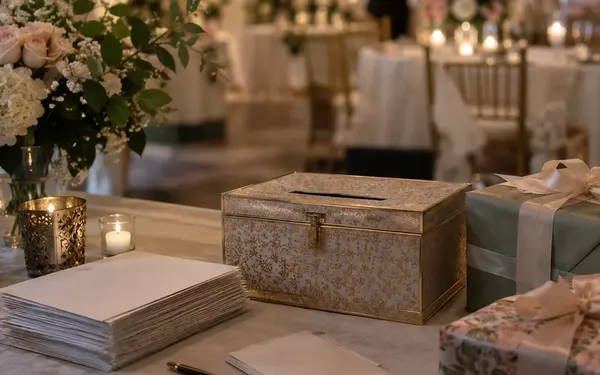
- Cash envelopes: discreet labels for planned vendor gratuities or family customs such as Joota Chupai, where observed.
Keep sharp pins secured and styling products away from the legal papers. The bridal attendant should be able to find a fastener without unpacking the marriage documents.
Picture the handover in a quiet mosque anteroom in Chicago before the Zuhr call to prayer. The groom’s sister opens a walnut-tabbed folio on a mahogany table. She places the pre-checked civil license and a silver fountain pen before the Imam, then passes the velvet Mahr pouch to the groom’s father. Outside the door, the family gathers; inside, the paperwork is ready.