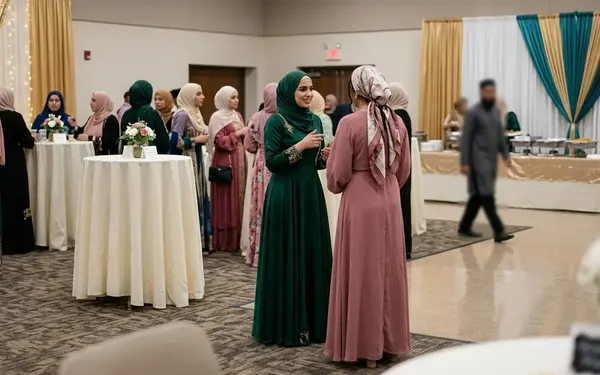
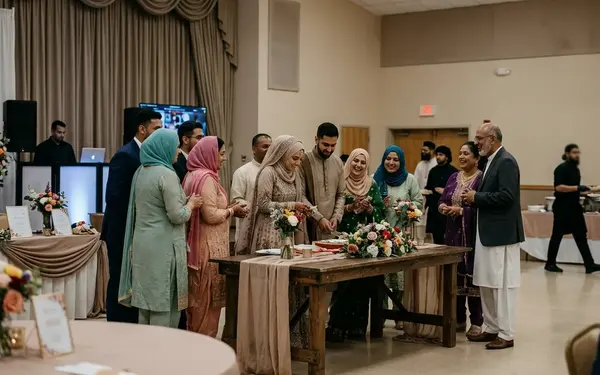
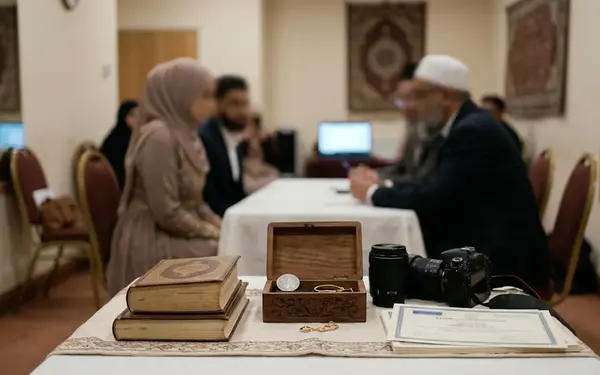
A zero-waste Islamic wedding begins with a question deeper than décor: what does celebration look like when Khilafah, the Islamic responsibility of stewardship, shapes the guest list, menu, clothing, and contracts?
One couple faced that question while planning a 300-guest, multi-day wedding. Their families expected a generous Mehndi, Nikah, and Walima. The couple wanted that same warmth without leaving a weekend’s worth of synthetic décor, untouched food, and disposable serviceware behind them.
The answer emerged through an audit, a few hard vendor conversations, and deliberate spending. Their case offers a useful model for couples who want abundance to mean hospitality rather than excess.
The 400-to-600-Pound Cost of a Conventional Walima
The venue’s historical figures set the stakes. A standard 300-guest, multi-day celebration generated an estimated 400 to 600 pounds of landfill waste, with synthetic decorations and unconsumed buffet food among the main sources.
That number changed the planning conversation. Waste was no longer an abstract environmental concern waiting somewhere beyond the ballroom doors. It was a physical output of choices already appearing in quotes, mood boards, and catering packages.
The couple spent three to four weeks auditing their preliminary plans and reviewing past family weddings. They traced what entered each celebration, how long it remained useful, and where it went after the last guest left. Three projected waste streams stood out:
- Synthetic bridal attire: multiple heavily embellished outfits with little prospect of being worn again.
- Floral foam and imported cut flowers: arrangements designed for a few hours of display, followed by disposal.
- Buffet surplus: prepared food left without a confirmed donation, storage, or composting route.
They initially considered an all-inclusive hotel package. It offered convenience, yet the venue mandates restricted outside recovery arrangements and locked several disposable items into the package. That conflict was enough to rule it out.
This case is a planning model rather than a direct environmental comparison. The audit followed the disposal routes disclosed by venues and vendors, using the venue’s own historical waste range as its baseline.
Audit Before Aesthetics
Put a waste column beside every line in the Perfect Muslim Wedding Planning Kit. Record what happens after use: return, rewear, donate, compost, recycle, or landfill. “Biodegradable” means little if the venue sends every bag to the same dumpster.
Khilafah gave the couple a first principle for resolving trade-offs. A lavish welcome could still include beautiful clothing, generous food, and layered décor. Each element simply needed an intentional life after the event.
A Modest Bridal Wardrobe Built Around Twelve Yards of Silk
The bride anchored her wardrobe in a family heirloom: a silk gown whose embroidery carried memories that a new purchase could not reproduce.
A local tailor carefully deconstructed the gown, removing and re-stitching 12 yards of vintage silk. The original embroidery remained intact while the silhouette changed to meet the bride’s modesty requirements for the Nikah. Sleeve coverage, neckline, lining, and movement were treated as structural decisions from the first fitting rather than alterations added at the end.
Working with heirloom cloth required restraint. Vintage silk can show old seam lines once opened, and embroidered sections dictate where a tailor can cut. The bride and tailor therefore planned the new shape around the strongest panels. Preserving the textile mattered more than forcing it into a fashionable pattern.
The Mehndi and Walima called for heavier embellishment and distinct colors. Instead of buying two more gowns, the bride rented both outfits. Sourcing and fitting them required an eight-to-ten-week lead time, so the appointments happened well before final accessory decisions.
Rental delivered clear value here: the bride wore celebration-specific garments without storing three formal outfits afterward. It also exposed a practical weakness in the current modest rental market. The option worked because she fit the boutique’s standard sizing matrix. Couples needing extensive size adaptation, custom bust coverage, or longer sleeves may find fewer suitable rentals.
Fit Before Deposit
Ask whether modest adjustments are permitted before paying a rental deposit. Confirm sleeve length, opacity under flash photography, hijab clearance around the neckline, and the return condition for beadwork. A gown that looks covered on a hanger can shift considerably while seated or raising the arms.
Contracts That Covered Halal Sourcing, Surplus Food, and Flowers
Vendor vetting took six to eight weeks because the couple needed written commitments, not warm assurances made during a tasting.
The caterer interviews began with halal sourcing. The couple asked who supplied the meat, how halal status was documented, whether locally raised organic options were available, and how products remained identified during storage and preparation. Availability varied with access to agricultural hubs and established halal supply chains, so some menus had to be assessed against what could genuinely be sourced near the venue.
The second set of questions followed the food after service:
- How does the kitchen estimate buffet quantities for the confirmed guest count?
- Which trays remain untouched under the caterer’s handling rules?
- Can safe surplus be cooled, labelled, and transferred promptly?
- Will the caterer coordinate with a certified food rescue organization before the event?
- Where do scraps and food that cannot be donated go?
That fourth question proved difficult. Attempting to donate untouched buffet leftovers without prior coordination often ends with the venue discarding the food because of liability concerns. The couple needed a halal caterer willing to align its handling process with a local food rescue organization and reflect that arrangement in the event plan.
For broader guidance on reducing edible surplus at the planning stage, the EPA’s practical material on food waste management offers a useful hierarchy: prevention comes before finding an outlet for excess.

The floral plan took a different route. Imported cut flowers and floral foam were replaced with 45 locally grown, seasonal potted plants. Arranged at varied heights, the pots gave each table texture without pretending to be conventional cut-flower centerpieces. Guests took them home after the Walima, turning décor into a living favor.
Logistics mattered. The florist and venue agreed on delivery timing, table protection, watering, and how guests would carry the plants safely. Small collection cards identified which pots could leave, preventing staff from clearing reusable containers into the waste stream.
Secure the Exit
A zero-waste promise belongs in the contract. Name the party responsible for surplus transfer, compost-bin placement, plant collection, and end-of-night sorting. If ownership remains vague, the venue’s default disposal routine usually wins.
What the Sustainable Choices Saved—and What Cost More
The budget did not move in one direction. Some environmental choices removed entire expense lines; others required spending more for labor, traceability, or specialized collection.
| Eco-Conscious Choice | Budget Impact | Category |
|---|---|---|
| Digital invitations | Savings | Stationery |
| Rented bridal gowns | Savings | Attire |
| Potted plant centerpieces | Neutral | Décor |
| Locally raised, organic halal meat | Increased cost | Catering |
| Commercial composting | Increased cost | Waste handling |
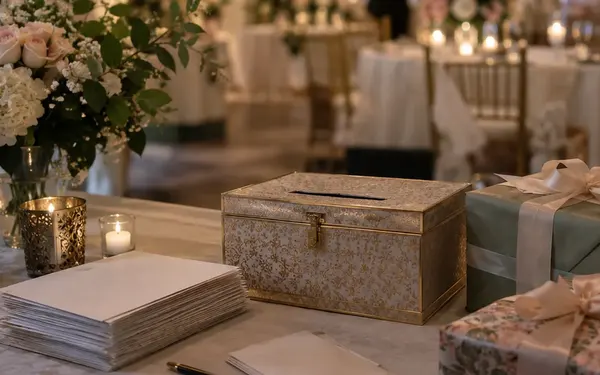
Digital invitations cut printing, envelopes, and postage. They also made last-minute schedule updates easier across several wedding events. Older relatives who preferred a tangible reminder received direct calls and help saving the details to their phones rather than a separate print run.
Skipping single-use favors freed another portion of the budget. The potted centerpieces already gave willing guests something meaningful to take home, so a second object at every place setting served little purpose. Renting the Mehndi and Walima outfits reduced the cost and storage burden of purchasing heavily embellished clothing for limited wear.
Those savings funded the expensive lines. Locally raised, organic halal meat carried a premium, while commercial composting required separate bins, collection planning, and a specialist provider. The composting service needed to be booked 12 to 16 weeks before the reception, well before many couples would normally finalize disposal details.
I would place composting beside catering on the booking calendar. Both affect venue access, staff instructions, and the handling of food throughout the night.
The useful budget lesson is allocation. The couple stripped spending from paper, disposable favors, and additional purchased gowns, then directed it toward halal sourcing and a verified route for organic material.
How Guests Carried the Walima’s Stewardship Forward
The visible zero-waste stations drew more curiosity than resistance. Clear signs separated compostable material from general rubbish, while strategically placed attendants answered questions during the first rush after dinner. Guests did not need a lecture; they needed bins close to the tables and instructions they could read in a glance.
Digital-only communication required a gentler approach with older family members. The couple used personal calls to preserve the warmth often associated with a formal invitation. That choice also gave relatives a chance to ask about timing, dress, transport, and the sequence of events. Efficiency and adab shared the same conversation.
The plants created the most immediate ripple. Forty-five centerpieces left in guests’ hands rather than in refuse bags. Some relatives who had arrived skeptical of restrained floral décor began asking how potted arrangements could work at their own celebrations.
Verification came later. The composting partner supplied a post-wedding waste audit two to three weeks after the Walima, confirming that organic matter and floral debris had been diverted from local landfills. The couple shared the report with their families, connecting every labelled bin and vendor clause to a recorded disposal outcome.
That is where zero-waste planning becomes an active expression of Khilafah. A rented gown avoids another seldom-used purchase. A donated meal keeps prepared halal food in service. A composted arrangement returns organic material to a productive stream. Each decision gives stewardship a physical form.
The number that now sits behind those choices is the venue’s own historical benchmark: 400 to 600 pounds of landfill waste from one 300-guest, multi-day wedding.